
Testing Strategy
Shift-Left Testing: How to Catch Bugs Before They Ship
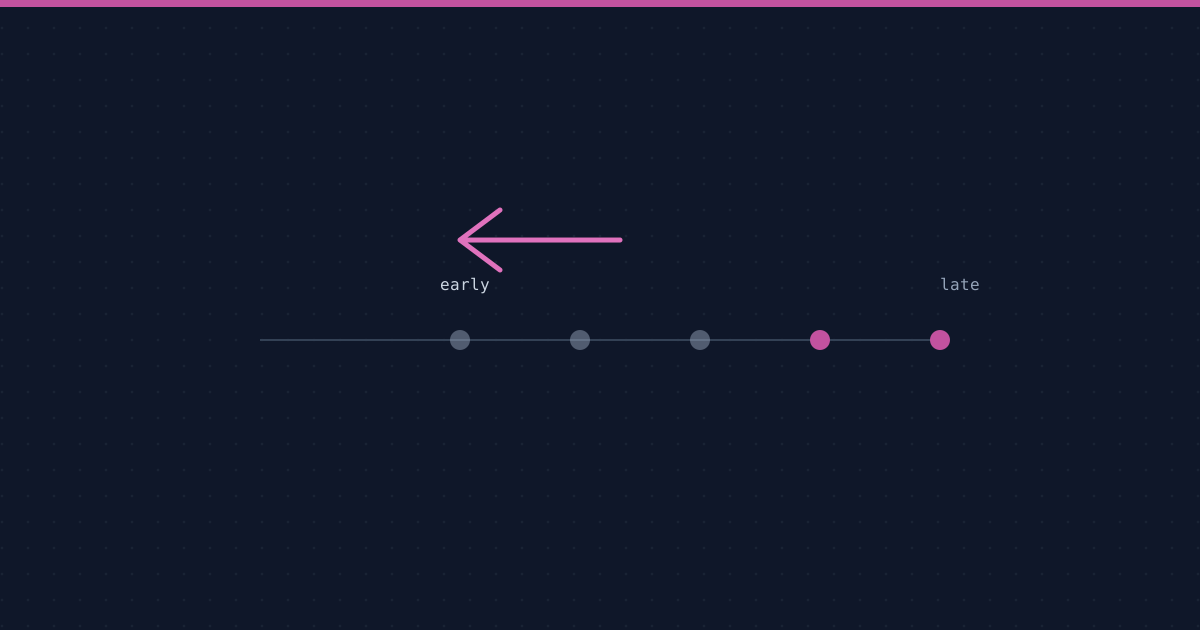
Shift-left testing gets pitched as "test earlier," which is technically correct and practically useless as advice. Teams already know they should test early. The real question is which checks move left, who owns them, and what happens when a check fails at 10am instead of during a release freeze.
What actually moves left
Shift-left is not "run the same test suite sooner." It's replacing late, expensive checks with earlier, cheaper ones that catch the same class of bug.
- Static analysis and linting catch type errors and obvious logic bugs before a PR is even opened, not in a QA environment three days later.
- Contract tests run against an API schema the moment it changes, instead of waiting for a full end-to-end suite to notice a broken integration.
- Unit and component tests run on every commit, so a regression is a five-minute fix, not a bisect through a week of merges.
- Requirements review. QA reading a ticket before a line of code exists, flagging ambiguous acceptance criteria while they're cheap to fix.
That last one is the most skipped and the highest-impact. A bug caught in a requirements review costs a comment. The same gap caught in production costs a hotfix, a postmortem, and a support ticket. Structured test case design techniques like boundary value analysis work best at exactly this stage.
Bolted a linter onto the pipeline and called it shift-left?
Shift-left only works when QA gets involved earlier, not just when the same checks run sooner. We build the rollout order around where your pipeline is actually missing a layer.
Where teams get it wrong
The common failure mode is bolting shift-left onto an unchanged pipeline: add a linter, call it done, keep the same two-week QA cycle at the end. That's not shift-left, it's shift-left-a-little-while-changing-nothing-else.
The other failure is treating "left" as "developer-only." Shifting testing left means QA gets involved earlier, not that QA gets involved less. A QA engineer in sprint planning, reviewing acceptance criteria and flagging edge cases before a story is estimated, prevents more bugs than the same engineer running a regression suite after the sprint ends.
A practical rollout order
- Add fast, deterministic checks to CI first: linting, type checking, unit tests. If these aren't blocking merges yet, nothing else on this list will stick.
- Get QA into planning and ticket review before sprint work starts, not as an afterthought once tickets are "done."
- Add contract or schema tests at the API boundary so integration breaks surface within minutes of a change, not during end-to-end runs hours later.
- Only then invest in expanding automated UI coverage. It's the most expensive layer to maintain, so it should catch what the cheaper layers structurally can't.
Shift-left works when each layer catches what the layer before it can't, and fails when it's just more testing crammed earlier without changing what gets tested where. If you're not sure which layer is missing in your pipeline, that's a good place to start. We build test automation strategy around exactly this kind of gap analysis, not just tool selection.